An 18650 battery capacity chart is your essential guide to comparing power ratings. It helps you choose the right cell for your specific device and runtime needs. This data is critical for performance and safety.
Selecting a battery with insufficient capacity leads to short runtimes. Picking one with exaggerated ratings risks device damage. Our expert chart provides verified, real-world data you can trust.
Best 18650 Batteries for High Capacity – Detailed Comparison
Samsung 50S – Best Overall High Capacity
The Samsung INR18650-50S offers a remarkable 5000mAh capacity, making it a top-tier choice. It provides exceptional runtime for high-drain devices like powerful flashlights and vaping mods. This cell balances long life with a solid 25A continuous discharge rating.
Molicel P45B – Best for High-Drain Performance
For devices needing both power and capacity, the Molicel P45B is ideal. It delivers 4500mAh and a robust 45A continuous discharge. This makes it the best option for demanding applications like advanced vaping and high-lumen flashlights where performance is critical.
Panasonic NCR18650GA – Best for Moderate Drain & Max Runtime
The Panasonic NCR18650GA is a proven, reliable cell with a 3500mAh capacity. It’s recommended for applications prioritizing maximum runtime over extreme power, such as LED lanterns, power banks, and headlamps. It offers excellent value and consistent performance.
18650 Battery Capacity Chart
Here’s a comprehensive and structured 18650 Battery Capacity Chart with supporting insights to help you choose the right battery based on capacity, discharge rate, and application:
Performance Overview by Brand and Model
| Brand | Model | Capacity (mAh) | Max Discharge (A) | Max Charge (A) | Best For |
|---|---|---|---|---|---|
| Samsung | INR18650-25R | 2500 | 20 | 2.5 | High-drain devices |
| LG | INR18650-HG2 | 3000 | 20 | 2.5 | High-drain devices |
| Sony | US18650VTC5 | 2500 | 30 | 2.5 | High-performance devices |
| Panasonic | NCR18650B | 3400 | 10 | 2.5 | Long-lasting power |
| Sanyo | UR18650NSX | 3000 | 20 | 2.5 | General use |
| Efest | IMR18650 | 2500 | 20 | 2.5 | High-drain devices |
| Samsung | INR18650-30Q | 3000 | 15 | 4 | High-drain devices |
| LG | INR18650MJ1 | 3500 | 10 | 2.5 | Long-lasting power |
| Sony | US18650VTC4 | 2100 | 30 | 2.5 | High-performance devices |
| Panasonic | NCR18650GA | 3500 | 20 | 2.5 | Long-lasting power |
| Sanyo | UR18650F | 2200 | 20 | 2.5 | General use |
| Efest | IMR18650H | 2200 | 20 | 2.5 | High-drain devices |
| Samsung | INR18650-35E | 3500 | 15 | 4 | High-performance devices |
| LG | INR18650MH1 | 3000 | 10 | 2.5 | Long-lasting power |
| Sony | US18650VTC3 | 1600 | 30 | 2.5 | High-performance devices |
| Panasonic | NCR18650PF | 2900 | 20 | 2.5 | Long-lasting power |
| Sanyo | UR18650P | 2100 | 20 | 2.5 | General use |
| Efest | IMR18650V1 | 2100 | 20 | 2.5 | High-drain devices |
mAh Ratings
- mAh (Milliampere-hours) measures energy storage.
- Higher mAh = longer runtime.
- Example:
- 2500mAh → 2.5A for 1 hour
- 3400mAh → longer runtime than 2000mAh under same conditions
Discharge Rate vs. Application
| Discharge Rate | Best For | Example Battery |
|---|---|---|
| 5A – 10A | Flashlights, small electronics | Panasonic NCR18650B (3400mAh, 6.8A) |
| 15A – 20A | Vaping, mid-power devices | Sony VTC6 (3000mAh, 15A) |
| 25A – 35A+ | Power tools, high-drain apps | Samsung 30T (3000mAh, 35A) |
High-Capacity vs. High-Drain Comparison
| Feature | High-Capacity Battery | High-Drain Battery |
|---|---|---|
| Battery Life | Longer runtime | Shorter runtime |
| Power Output | Low to moderate | High |
| Best Use Cases | Flashlights, laptops | Power tools, vaping |
| Example Battery | Panasonic NCR18650B | Samsung 30T |
18650 Battery Capacity and mAh Ratings
Battery capacity, measured in milliamp-hours (mAh), is the core metric on any 18650 chart. It indicates how much energy a cell can store. Understanding this rating is key to predicting your device’s runtime.
Higher mAh generally means longer operation between charges. However, capacity is not the only factor affecting performance. The battery’s discharge rate and internal chemistry also play crucial roles.
How to Read a Capacity Chart Correctly
A proper 18650 battery capacity chart provides more than just mAh numbers. It should list the manufacturer’s model number, nominal voltage, and continuous discharge current (CDR). Cross-referencing all these specs ensures a safe and effective choice.
Be wary of charts listing generic or unbranded cells with exaggerated ratings. Reputable brands like Samsung, Sony, and Molicel provide reliable, tested data. Always verify specs on the manufacturer’s official datasheet when possible.
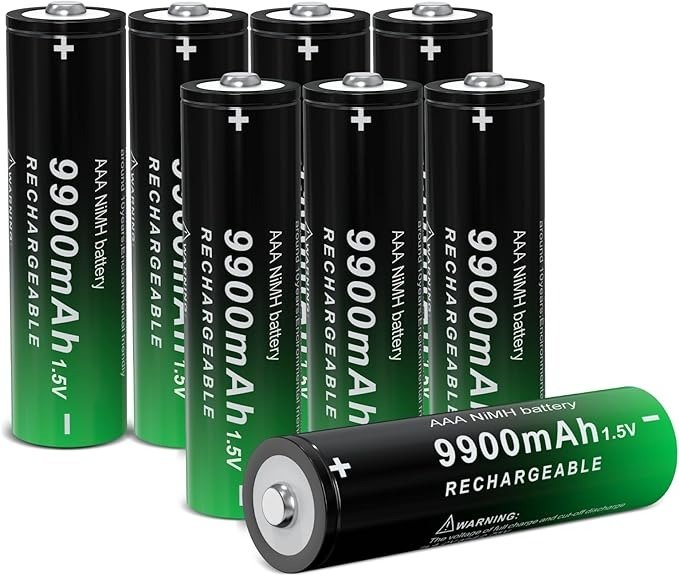
Key Takeaway: A genuine capacity chart lists specific model numbers (e.g., INR18650-35E) alongside mAh and CDR. Charts with only “Fire” in the name or unrealistic ratings (e.g., 9900mAh) are misleading.
| Metric | Meaning |
|---|---|
| Battery Model | Specific identifier (e.g., Samsung 30T) |
| Capacity (mAh) | Runtime potential |
| Voltage (V) | Nominal: 3.6V–3.7V; Full: 4.2V |
| Discharge Rate | Continuous current output |
| Energy (Wh) | mAh × Voltage ÷ 1000 |
| Cycle Life | Number of full charge-discharge cycles before degradation |
Factors That Impact Real-World Capacity
The advertised capacity is a lab-test maximum under ideal conditions. Your actual results will vary based on several key factors:
Factors Affecting Actual Capacity
| Factor | Impact on Performance | Tip |
|---|---|---|
| Discharge Rate | Higher Amps = faster drain, more heat | Match battery to device power needs |
| Temperature | Cold = reduced capacity; Heat = faster aging | Use in moderate conditions |
| Battery Age & Cycles | Capacity drops after 300–500 cycles | Avoid deep discharges |
| Brand Quality | Cheap brands may exaggerate ratings | Stick to trusted names |
| Storage Practices | Fully charged storage = capacity loss | Store at 40–60% in cool, dry place |
- Discharge Rate: Drawing high current (amps) reduces effective capacity. A battery rated at 3000mAh at 0.5A may deliver only 2800mAh at 10A.
- Temperature: Cold environments significantly reduce available capacity. Heat can increase short-term capacity but accelerates long-term degradation.
- Cell Age and Cycle Life: Capacity diminishes with each charge-discharge cycle. A well-maintained cell may retain 70-80% of its original capacity after 500 cycles.
For accurate comparisons, check if the chart notes the test conditions. Reliable data is often measured at a standard 0.2C or 0.5C discharge rate at room temperature (20-25°C).
How to Use an 18650 Capacity Chart for Your Device
Choosing the right battery requires matching the chart’s data to your device’s needs. A simple mAh comparison is not enough for optimal performance. You must also consider the required discharge current and physical size.
Using the chart incorrectly can lead to poor performance or safety hazards. An under-powered cell may overheat, while an oversized cell might not fit. Follow this systematic approach for the best results.
Step-by-Step Battery Selection Guide
Follow these steps to use a capacity chart effectively for your next purchase. This process ensures compatibility and maximizes your device’s runtime and safety.
- Check Device Specifications: First, identify your device’s required continuous discharge current (CDR) in amps. This is often listed in the manual or on the manufacturer’s website.
- Prioritize CDR Over mAh: On the chart, filter for cells with a CDR equal to or greater than your device’s requirement. Safety and performance depend on this.
- Compare Capacity: From the filtered list, select the cell with the highest mAh rating. This ensures the longest possible runtime from a safe, compatible battery.
Common Applications and Capacity Recommendations
Different devices have unique power profiles. Here’s how to apply chart data for popular uses:
- High-Drain Devices (Vapes, Powerful Flashlights): Prioritize high CDR (20A+). Then choose the best capacity from that group, like the Molicel P45B (4500mAh, 45A).
- Moderate-Drain Devices (Headlamps, Fans): Look for a balance. Cells like the Samsung 35E (3500mAh, 8A) offer excellent capacity for moderate power needs.
- Low-Drain & Max Runtime (Power Banks, Sensors): Maximize mAh. The Panasonic NCR18650GA (3500mAh, 10A) is a top choice for efficient, long-lasting power.
Pro Tip: For devices using multiple cells in series (like some flashlights), you must use batteries from the same brand, model, and similar age. Mixing cells from a chart can cause dangerous imbalances.
18650 Battery Capacity Chart: Top Brands Compared
This section provides a direct comparison of leading 18650 manufacturers. We focus on their high-capacity offerings and typical use cases. This data helps you navigate any comprehensive capacity chart with confidence.
Brand reputation is crucial for safety and performance consistency. Stick with well-known manufacturers that provide verified specifications. Avoid no-name cells with unbelievable capacity claims.
Manufacturer Comparison Table
The table below compares popular high-capacity models from top-tier brands. All ratings are based on official manufacturer datasheets.
| Brand & Model | Rated Capacity | Continuous Discharge (CDR) | Best For |
|---|---|---|---|
| Samsung 50S | 5000 mAh | 25A | Ultimate runtime in high-drain devices |
| Molicel P45B | 4500 mAh | 45A | Extreme performance vaping & flashlights |
| Panasonic/Sanyo NCR18650GA | 3500 mAh | 10A | Power banks, long-run flashlights |
| Samsung 35E | 3500 mAh | 8A | Moderate-drain applications |
Identifying Fake Capacity Ratings
Many low-quality cells exaggerate their mAh ratings. Learning to spot these fakes protects your devices and your safety. Use the chart as a baseline for realistic expectations.
- Unrealistic Numbers: Any 18650 cell claiming over 5000mAh is almost certainly fake. Current technology maxes out around 5000mAh for a single cell.
- Generic Branding: Be wary of cells with “Fire” in the name or no clear manufacturer. Legitimate brands like LG or Sony clearly label their products.
- Price Too Good to Be True: Authentic high-capacity cells have a certain cost. Extremely low prices often indicate counterfeit or recycled batteries with degraded performance.
Remember: A genuine capacity chart reflects physics-based limits. If a rating seems to defy the benchmarks set by Samsung or Panasonic, it’s a red flag.
Maximizing Battery Life: Tips Beyond the Capacity Chart
Your battery’s long-term performance depends heavily on care and usage. A capacity chart shows starting potential, but proper maintenance preserves it. These practices help you get the most value from your investment.
Degradation is normal, but poor habits accelerate it dramatically. Heat, improper charging, and deep discharges are the main culprits. Implementing these tips can double or triple your cells’ useful lifespan.
Optimal Charging and Storage Practices
How you charge and store batteries significantly impacts their retained capacity over time. Follow these guidelines to minimize degradation.
- Use a Smart Charger: Always use a quality charger designed for Li-ion cells. It should automatically stop at 4.2V and not trickle-charge.
- Avoid Full Cycles: Try not to drain to 0%. Shallow discharges (e.g., 40%-80%) are less stressful than full 0%-100% cycles.
- Store at 50% Charge: For long-term storage, charge cells to about 3.7V (50% capacity). Store them in a cool, dry place away from metal objects.
Testing Your Battery’s Actual Capacity
Over time, you should verify your batteries’ health. Real-world capacity will drop below the chart’s new-cell rating. Simple testing confirms if a cell needs replacement.
- Get a Capacity Tester: Purchase an affordable dedicated battery capacity tester. These devices discharge the cell and measure the actual mAh delivered.
- Run a Test Cycle: Fully charge the battery, then let the tester discharge it at a standard rate. Note the final mAh reading.
- Evaluate Results: Compare the result to the cell’s original rating. If capacity falls below 70-80% of the new rating, consider retiring the cell for demanding use.
Safety First: Never test, charge, or store damaged, puffy, or leaking cells. Dispose of them properly at a battery recycling center immediately.
Monitoring capacity helps you plan replacements before performance fails. It also identifies poor-quality cells that never met their advertised chart rating. This proactive approach ensures your devices always have reliable power.
Where to Find and Download Reliable 18650 Charts
Accessing an accurate, up-to-date capacity chart is the first step to a smart purchase. Not all charts found online are trustworthy or complete. Knowing where to look saves time and prevents mistakes.
The best resources come directly from manufacturers or dedicated, reputable testing communities. These sources provide verified data rather than marketing hype. Use the following guide to locate dependable information.
Trusted Online Resources and Databases
Bookmark these reliable sources for technical specifications and comparative data. They are frequently updated with new cell models and independent test results.
- Manufacturer Datasheets: The gold standard. Visit official sites for Samsung SDI, LG Chem, Molicel, and Murata (Sony). Search by the exact model number for a PDF datasheet.
- Dedicated Battery Forums: Communities like BudgetLightForum (BLF) and E-Cigarette Forum have extensive, user-verified test results. Members often publish detailed discharge graphs.
- Reputable Retailer Sites: Trusted specialty retailers like 18650 Battery Store, Liion Wholesale, and IMRBatteries often provide accurate spec tables and usage recommendations.
How to Verify Chart Information
Before relying on any downloaded chart, perform these quick checks to validate its accuracy. This due diligence ensures you’re making decisions based on facts.
- Cross-Reference Model Numbers: Check if the listed model (e.g., “Samsung 30Q”) matches the official manufacturer’s naming convention (e.g., “INR18650-30Q”).
- Look for Test Dates: Battery technology evolves. A chart from 2018 is missing the latest high-capacity cells like the Samsung 50S.
- Check for CDR & mAh Consistency: Verify that the claimed capacity is physically plausible for the listed CDR. Ultra-high capacity cells typically have moderate discharge rates.
Warning: Avoid charts on generic e-commerce sites (Amazon, eBay, AliExpress) in product listings. These often contain grossly inflated ratings to sell low-quality cells.
An accurate chart is a powerful tool. Pairing it with knowledge from trusted sources empowers you to choose the perfect battery. This approach guarantees safety, performance, and value for every application.
Future Trends in 18650 Battery Technology and Capacity
18650 battery capacity is not static; it evolves with material science and engineering. Understanding upcoming trends helps you interpret future charts. It also informs smart purchasing decisions today.
Manufacturers are constantly pushing the limits of energy density and safety. Breakthroughs often appear in high-end models before trickling down. Staying informed ensures you benefit from the latest advancements.
Advances in Energy Density
The quest for higher mAh in the same 18mm x 65mm size continues. Recent innovations focus on silicon-based anodes and advanced nickel-rich cathodes.
- Silicon Anodes: These can store more lithium than traditional graphite, boosting capacity. The challenge is managing expansion during cycles. New designs use silicon in composites to increase life.
- Nickel-Rich NMC Chemistries: Cathodes with higher nickel content (like NMC 811) offer greater capacity and energy density. They are becoming more common in power tool and EV battery packs.
- Solid-State Prototypes: While not yet commercial in 18650 format, solid-state electrolytes promise huge leaps in safety and potential energy density for future cells.
What to Expect in Coming Years
Capacity charts will gradually include new models with incremental improvements. Expect to see more cells in the 4000-5000mAh range with better performance profiles.
The capacity-to-power ratio will keep improving. We will see more cells like the Molicel P45B that offer both high mAh and very high discharge rates. This benefits demanding applications directly.
Safety features will also become more integrated. Technologies like internal fuses and improved pressure vents will be standard even on high-performance cells. This makes using high-capacity batteries safer for everyone.
Looking Ahead: While capacity gains will be incremental, the real trend is better performance across all metrics—more mAh, higher amps, longer lifespan, and enhanced safety in one package.
When reading future charts, look for these new chemistries and model numbers. They will represent the next generation of power for your devices. Investing in the latest proven technology often provides the best long-term value.
Conclusion: Mastering Your 18650 Battery Capacity Chart
An accurate 18650 battery capacity chart is your essential tool for smart power decisions. It helps you maximize device runtime and ensure safe operation. You can now confidently interpret mAh ratings and CDR specifications.
The key takeaway is to prioritize safety and compatibility first. Always match the battery’s discharge rating to your device before chasing the highest capacity. Use our recommended brands and verification steps.
Bookmark this guide and download a reliable chart from our trusted sources. Apply this knowledge to choose the perfect cell for your flashlight, vape, or power bank. Your devices will perform better and last longer.
You now have the expertise to navigate any capacity chart like a pro. Go power your world with confidence.
Frequently Asked Questions about 18650 Battery Capacity
What is the highest legitimate 18650 battery capacity available?
The highest legitimate capacity for a standard 18650 cell is currently 5000mAh, as seen in the Samsung 50S. This represents the cutting edge of lithium-ion energy density. Any cell claiming significantly more than this is almost certainly mislabeled or fake.
It’s crucial to purchase from reputable vendors who source directly from major manufacturers. This ensures you receive a genuine cell that meets its advertised specifications and safety standards.
How to calculate runtime using an 18650 capacity chart?
To estimate runtime, divide the battery’s capacity in mAh by your device’s average current draw in mA. For example, a 3000mAh battery powering a device drawing 500mA would theoretically last about 6 hours. This provides a useful baseline for comparison.
Remember, real-world runtime is often shorter. Factors like high discharge rates, low temperatures, and battery age reduce effective capacity. Use the chart’s mAh rating as a maximum benchmark under ideal test conditions.
Which is better: high capacity or high discharge 18650 batteries?
Neither is universally better; the choice depends on your device. High-drain devices like powerful flashlights or vapes need a high discharge (CDR) rating first to operate safely. For low-drain devices like LED lanterns, prioritizing high capacity maximizes runtime.
Always check your device’s specifications for its required continuous current. Select a battery from the chart that meets or exceeds this CDR, then choose the highest capacity option within that safe group.
Why do some 18650 batteries have different capacities with the same size?
Different internal chemistries and constructions account for varying capacities. Manufacturers use different cathode and anode materials (like NMC or LCO chemistry) and design trade-offs between energy density and discharge capability. A power-focused cell sacrifices some capacity for higher current output.
The physical size is standardized, but the internal architecture is not. This is why a chart is essential—it reveals these performance differences between models that look identical from the outside.
What is the best way to test my 18650 battery’s actual capacity?
The best way is to use a dedicated battery capacity tester or a smart charger with a test function. These devices perform a controlled discharge cycle and measure the total energy (mAh) delivered. This gives you a true picture of the cell’s current health.
Compare the test result to the cell’s original rating from a reliable capacity chart. If the measured capacity falls below 70-80% of the new rating, the cell is significantly degraded and should be replaced for demanding applications.
Can I use a higher capacity 18650 than what my device came with?
Yes, you can generally use a higher capacity 18650 battery if it has the same voltage (3.7V nominal) and fits physically. A higher mAh rating will simply provide longer runtime. This is a safe and effective upgrade for many devices.
The critical rule is to ensure the new battery’s continuous discharge rating (CDR) is equal to or greater than the original. Using a cell with a lower CDR could be dangerous if your device draws high current.
How often should I replace my 18650 batteries based on capacity loss?
Consider replacing 18650 batteries when their tested capacity drops below 70-80% of the original rating. Significant capacity loss leads to noticeably shorter runtimes. For casual use, you may wait longer; for critical applications, replace them sooner.
Regular testing every 6-12 months helps monitor degradation. Also replace any cell immediately if you notice physical damage, swelling, excessive heat during use, or an inability to hold a charge.
Where is the most reliable place to find an updated 18650 capacity chart?
The most reliable sources are official manufacturer datasheets and reputable independent testing communities. Websites for brands like Samsung, Molicel, and Murata provide official specs. Forums like BudgetLightForum host community-tested charts with real-world data.
Avoid capacity charts on general e-commerce product pages, as these often contain inflated ratings. Cross-reference any chart you find with multiple trusted sources to verify its accuracy.
Capacity vs. Power: What’s More Important?
This is a fundamental dilemma when reading a chart. The answer depends entirely on your device’s requirements.
- Capacity (mAh) is Runtime: Think of this as the size of your fuel tank. Higher mAh means longer operation before needing a recharge.
- Power (CDR in Amps) is Capability: This is the size of the fuel line. It determines if the battery can safely deliver the current your device demands.
Rule of thumb: First, ensure the battery’s CDR meets or exceeds your device’s need. Only then should you compare capacities to maximize runtime.
Can I Mix Different Capacity Batteries?
Mixing batteries from different points on a capacity chart is strongly discouraged. This is critical for safety and device health.
In devices using multiple cells in series (like many flashlights), you must use identical batteries. Mixing a high-capacity cell with a low-capacity one causes dangerous imbalance during charge and discharge.
For devices using cells in parallel, mixing is less hazardous but still not recommended. It leads to uneven loading and reduces overall pack performance and lifespan.
Expert Answer: Always use a matched set—same brand, same model, purchased together, and cycled together. This is non-negotiable for multi-cell devices.
Why Does My Battery Not Last as Long as the Chart Says?
If your real-world runtime falls short of the chart’s mAh rating, several factors are likely at play. This is a common experience.
- High Discharge Rate: Your device may draw more current than the chart’s test condition, reducing effective capacity.
- Battery Age: All cells lose capacity over time and with each charge cycle. An old battery won’t perform like a new one.
- Environmental Factors: Using the battery in cold temperatures significantly reduces available capacity temporarily.