
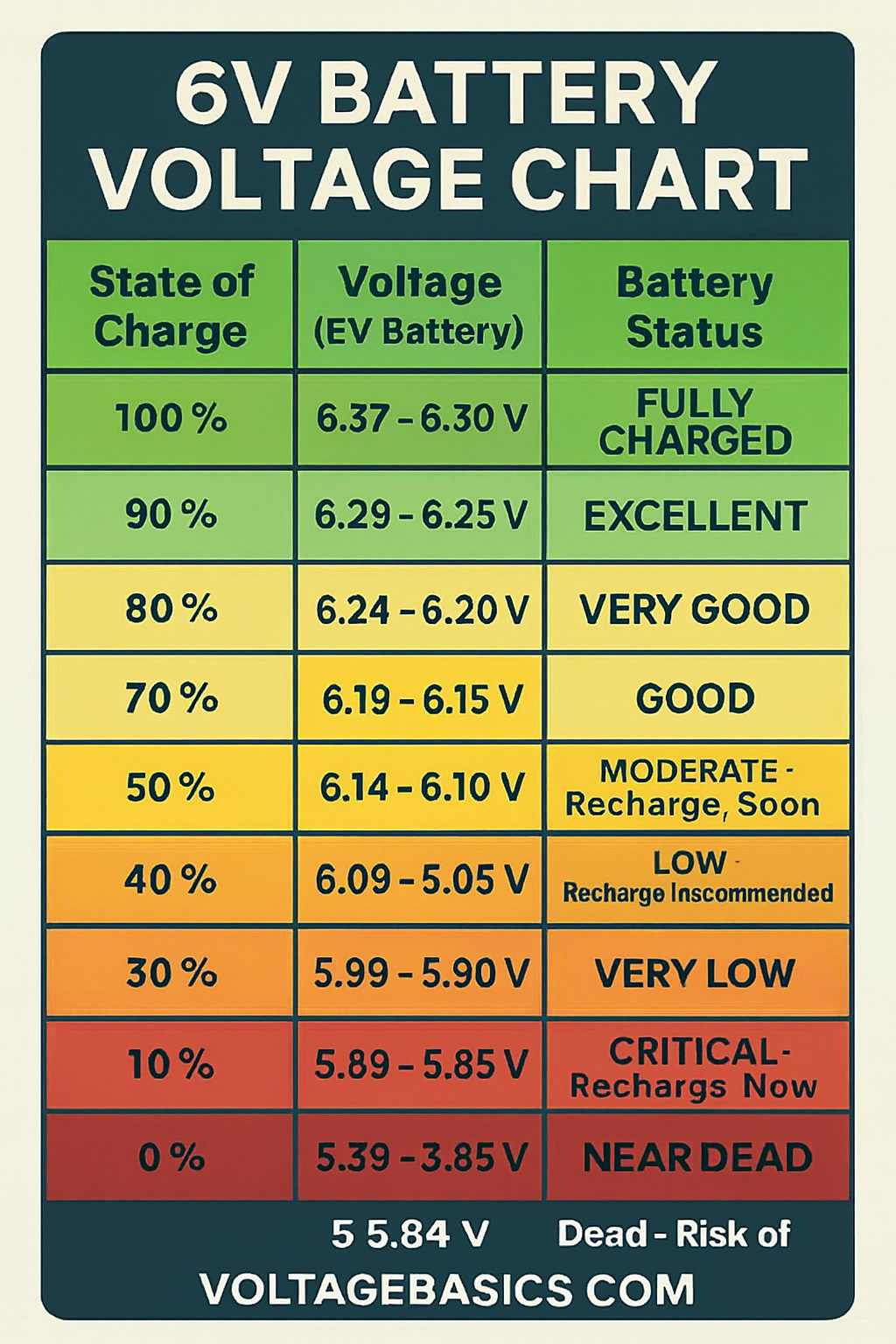
A 6V battery voltage chart is a crucial reference tool for monitoring battery health and charge state. It shows the exact voltage readings that correspond to different charge levels. This guide provides the definitive chart you need.
Using this chart prevents damage from overcharging or deep discharge. It helps you maximize battery lifespan and performance. Proper voltage monitoring is key for reliable power.
Best 6V Battery Chargers for Accurate Voltage Monitoring
Pairing your voltage chart with a high-quality charger is essential. The right charger ensures safe, efficient charging and precise voltage regulation. We recommend these three top-performing models for maintaining optimal 6V battery health.
NOCO Genius GENIUS1 – Best Smart Charger
The NOCO Genius1 is a fully-automatic 1-amp smart charger. It features advanced diagnostics and a repair mode for sulfated batteries. Its precise voltage control makes it ideal for matching readings to your 6V battery voltage chart. Best for maintaining motorcycles, lawn tractors, and classic cars.
Battery Tender 021-0123 – Best for Long-Term Maintenance
This 0.75-amp charger is the gold standard for battery maintenance. It provides a full charge before switching to a float mode to prevent overcharging. Its consistent output delivers reliable voltage for easy chart comparison. The ideal choice for seasonal vehicles and standby power applications.
Schumacher SC1280 – Best for Versatility and Power
The Schumacher SC1280 is a 6/12V, 15-amp charger with a manual and automatic charging modes. It includes a digital display for real-time voltage monitoring. This makes it the best option for quickly charging and testing larger 6V batteries, like those in golf carts or solar setups.
6V Battery Voltage Readings
Interpreting your voltage readings correctly is the first step to proper battery care. A 6V battery voltage chart translates raw numbers into actionable insights.
What is a Healthy 6V Battery Voltage?
A fully charged, healthy 6V battery should read approximately 6.3 to 6.4 volts at rest. This “open circuit voltage” is measured 12-24 hours after charging. It indicates the battery’s chemical potential energy is at its peak.
Under a light load, a good battery will maintain a stable voltage above 6V. Significant voltage drop under minimal load suggests aging or damage. Always test voltage with the battery at room temperature for accuracy.
The Complete 6V Battery Voltage Chart
Use this chart as your primary reference for lead-acid batteries. It correlates voltage with the approximate State of Charge (SOC).
| State of Charge (SOC) | Voltage (6V Battery) | Battery Status |
|---|---|---|
| 100% | 6.37 – 6.30 V | Fully Charged |
| 90% | 6.29 – 6.25 V | Excellent |
| 80% | 6.24 – 6.20 V | Very Good |
| 70% | 6.19 – 6.15 V | Good |
| 60% | 6.14 – 6.10 V | Fair |
| 50% | 6.09 – 6.05 V | Moderate – Recharge Soon |
| 40% | 6.04 – 6.00 V | Low – Recharge Recommended |
| 30% | 5.99 – 5.95 V | Very Low |
| 20% | 5.94 – 5.90 V | Critical – Recharge Now |
| 10% | 5.89 – 5.85 V | Near Dead |
| 0% | ≤ 5.84 V | Dead – Risk of Sulfation |
Technical Notes
- These values assume resting voltage (no load, no charge for 2+ hours).
- Voltage may vary slightly depending on battery age, temperature, and internal resistance.
- Avoid discharging below 5.9 V to prevent permanent damage.
Key Takeaway: A reading below 6.1V indicates a battery that needs immediate charging. Consistently operating below 50% charge drastically shortens battery lifespan.
Factors That Affect Voltage Readings
Several variables can influence your multimeter reading. Understanding these ensures you interpret your 6V battery voltage chart correctly.
- Temperature: Voltage decreases in cold temperatures and increases when warm. Adjust your interpretation slightly based on environment.
- Recent Activity: Voltage is higher right after charging or under load. Always let the battery “rest” for several hours for a true state-of-charge reading.
- Battery Type: While this chart fits standard lead-acid, AGM or Gel batteries may have slightly different voltage profiles. Always check manufacturer specs.
How to Test and Maintain Your 6V Battery Voltage
Regular testing is essential for proactive battery maintenance. Using your 6V battery voltage chart effectively requires proper tools and technique. Follow this guide to get accurate readings and extend battery life.
Step-by-Step Guide to Testing Voltage
Accurate testing is simple with a digital multimeter. This process gives you the reliable data needed for the voltage chart.
- Safety First: Ensure the battery is in a well-ventilated area. Wear safety glasses and remove any jewelry.
- Prepare Multimeter: Set your digital multimeter to the DC voltage setting. Choose the 20V range for a precise 6V reading.
- Connect Probes: Touch the red (positive) probe to the battery’s “+” terminal. Touch the black (negative) probe to the “-” terminal.
- Record Reading: Note the stable voltage displayed on the screen. Compare this number to your 6V battery voltage chart.
Optimal 6V Battery Maintenance Schedule
Consistent maintenance prevents failure and maximizes investment. Pair scheduled checks with your voltage chart analysis.
- Monthly: Perform a voltage check using the method above. Clean terminals with a baking soda solution if corrosion is present.
- Every 3 Months: Conduct a load test if possible, especially before a critical season. Check electrolyte levels in flooded batteries and top up with distilled water.
- Storage Periods: Fully charge the battery before storage. Connect a maintenance charger to counteract self-discharge and check voltage monthly.
Pro Tip: Always test voltage after the battery has rested for at least 12 hours post-charging or use. This provides the true “at rest” voltage for your chart comparison.
Troubleshooting Common Voltage Issues
Your voltage readings can reveal specific problems. Use this guide to diagnose issues indicated by the chart.
| Symptom / Reading | Potential Cause | Recommended Action |
|---|---|---|
| Voltage drops rapidly under load | High internal resistance, sulfation, or old age. | Try a desulfation charge; may need replacement. |
| Voltage reads normal but battery dies quickly | Low capacity; battery cannot hold a charge. | Perform a capacity test; battery is likely failing. |
| Voltage is high (>6.6V) after charging | Overcharging due to a faulty charger or regulator. | Immediately check and adjust or replace the charger. |
Advanced Tips: Extending 6V Battery Life with Voltage Management
Mastering your voltage chart unlocks strategies to significantly prolong battery lifespan. Proactive management prevents the most common causes of premature failure. Implement these advanced practices for optimal performance and value.
Preventing Sulfation Through Voltage Awareness
Sulfation is the leading cause of 6V battery death. It occurs when lead sulfate crystals harden on plates during prolonged discharge. Your voltage chart is the best early-warning system.
- Never Store Discharged: Always charge a battery to 100% (6.3V+) before storage. A battery left below 6.1V will sulfate rapidly.
- Use a Maintenance Charger: A smart float charger applies a tiny current to maintain perfect voltage. It counteracts self-discharge during long idle periods.
- Recharge Immediately: After any use that brings voltage near 6.1V (50% charge), recharge as soon as possible. Depth of discharge directly impacts cycle life.
Temperature Compensation for Accurate Voltage Reading
Battery voltage is inherently temperature-sensitive. For precise state-of-charge assessment, you must account for this variable.
| Battery Temperature | Voltage Adjustment | Practical Example |
|---|---|---|
| Cold (< 20°C / 68°F) | Subtract 0.01V per 10°F below 80°F | At 50°F, a reading of 6.25V is closer to a true 6.28V. |
| Hot (> 25°C / 77°F) | Add 0.01V per 10°F above 80°F | At 90°F, a reading of 6.35V may indicate a true 6.33V. |
This correction ensures you don’t overcharge a hot battery or undercharge a cold one based on raw chart numbers.
Expert Insight: For maximum longevity, keep your 6V battery in a moderate, stable temperature environment. Extreme heat accelerates internal corrosion, while extreme cold reduces capacity and promotes sulfation.
Creating a Battery Log for Long-Term Health Tracking
Move from reactive testing to predictive maintenance with a simple log. Tracking data over time reveals decline patterns before failure occurs.
- Record Baseline: Log the voltage and date when the battery is new and fully charged. Note the application and charger used.
- Schedule Monthly Entries: Document the “at rest” voltage on a set day each month. Also note the ambient temperature.
- Log After Significant Use: Record voltage before and after a major discharge cycle (e.g., a round of golf, a long ride).
- Analyze the Trend: Over months, you’ll see if the battery’s resting full-charge voltage is decreasing—a clear sign of aging.
Safety Protocols and When to Replace Your 6V Battery
Working with batteries requires respecting their potential hazards. Your voltage chart not only guides maintenance but also signals critical safety thresholds. This section outlines essential safety practices and definitive replacement criteria.
Essential Safety Measures for Handling 6V Batteries
Always prioritize personal safety when testing or charging. Lead-acid batteries contain corrosive acid and can produce explosive gases.
- Ventilation is Critical: Always charge and test in a well-ventilated area. This prevents the buildup of hydrogen gas, which is highly flammable.
- Wear Protective Gear: Use safety glasses and acid-resistant gloves. This protects from potential acid splashes from flooded batteries.
- Prevent Short Circuits: Never place metal tools or objects across the battery terminals. This can cause severe sparks, heat, and explosion risk.
- Correct Connection Order: When connecting a charger, attach positive (red) first, then negative (black). Disconnect in reverse order: negative first, then positive.
Definitive Signs You Need a New 6V Battery
Voltage readings provide objective data for the replacement decision. Combine chart analysis with performance observations for a clear diagnosis.
| Sign / Test Result | What It Means | Action |
|---|---|---|
| Voltage won’t rise above 6.2V after a full charge cycle. | Severe sulfation or plate damage. The battery cannot accept a full charge. | Replacement is almost always necessary. |
| Fully charged voltage drops below 6.0V within 24 hours (no load). | High self-discharge due to an internal short or damaged separator. | Battery is defective and should be replaced. |
| Passes voltage test but fails a load test dramatically. | The battery has lost its capacity (amp-hour rating) but not its surface charge. | Replace; it cannot perform its intended job. |
Safety Warning: If a battery becomes hot to the touch, is swollen, or is leaking electrolyte during charging, disconnect the charger immediately. Move it to a safe, outdoor area and consult a professional.
Proper Disposal and Recycling of Old Batteries
6V lead-acid batteries are nearly 100% recyclable. Never dispose of them in regular trash due to toxic materials.
- Check Local Regulations: Many retailers and municipalities have mandatory take-back programs. Auto parts stores often provide this service for free.
- Prepare for Transport: Tape the terminals to prevent accidental short circuits during transport. Keep the battery upright to avoid leaks.
- Recycle Responsibly: Take the old battery to a designated recycling center, hazardous waste facility, or participating retailer. This recovers valuable lead and plastic.
6V Battery Voltage Chart for Specific Battery Types
While the standard chart is an excellent guide, specialized batteries have nuanced voltage characteristics. Understanding these differences ensures precise management. This section details voltage profiles for common 6V battery chemistries.
6V Lithium-Ion vs. Lead-Acid Voltage Comparison
Lithium-ion (LiFePO4) batteries are increasingly popular for their weight and performance. Their voltage profile is fundamentally different from lead-acid.
| Battery Chemistry | Nominal Voltage | Fully Charged | Fully Discharged | Charge Curve |
|---|---|---|---|---|
| Lead-Acid (Flooded/AGM) | 6V | ~6.4V | ~5.8V | Gradual, steady decline. |
| Lithium-Ion (LiFePO4) | 6.4V* | ~7.2V | ~6.0V | Very flat, then sharp drop. |
*Note: A “6V” LiFePO4 battery has a higher nominal voltage. Never use a standard lead-acid charger on a lithium battery without a compatible profile.
Deep-Cycle vs. Starting Battery Voltage Profiles
Both are lead-acid, but their design changes how voltage behaves under use. Your chart applies to both, but discharge patterns differ.
- Deep-Cycle Batteries: Designed for long, slow discharges (e.g., golf carts, solar). Voltage will drop slowly and steadily as per the chart over many hours of use.
- Starting (Cranking) Batteries: Designed for short, high-current bursts. Voltage may plunge momentarily during engine start but should recover quickly to a resting voltage above 6.2V.
- Key Takeaway: A starting battery consistently reading below 6.2V at rest is failing. A deep-cycle battery is meant to be cycled between the chart’s 100% and 50% points regularly.
Critical Reminder: Always refer to the manufacturer’s datasheet for the most accurate voltage parameters for your specific battery model and chemistry. The standard chart is a reliable fallback for lead-acid types.
Interpreting Voltage in a 6V Battery Bank
Many systems use multiple 6V batteries wired in series or parallel. Individual battery testing is crucial for bank health.
- Test Each Battery Individually: Disconnect series/parallel links. Test each battery’s voltage separately and compare to the chart.
- Identify the Weakest Link: In a series string, the lowest-capacity battery dictates overall performance. A voltage difference of more than 0.2V between batteries indicates an imbalance.
- Balance the Bank: Charge underperforming batteries individually. Replace any battery that consistently fails to reach a full charge voltage or discharges significantly faster than its peers.
Tools and Resources for Mastering 6V Battery Voltage
Equipping yourself with the right tools transforms voltage chart theory into effective practice. Beyond a multimeter, several resources enhance your diagnostic capabilities. This section covers essential gear and valuable reference materials.
Essential Toolkit for Professional-Level Monitoring
Upgrade from basic testing to comprehensive analysis with these key instruments. Each tool provides a different piece of the battery health puzzle.
- Digital Multimeter with Data Logging: A must-have for accurate voltage readings. Models with Min/Max/Avg recording capture voltage drops under load that you might otherwise miss.
- Hydrometer for Flooded Batteries: Measures electrolyte specific gravity. This provides a second, highly accurate data point to correlate with your voltage chart readings.
- Battery Load Tester: Applies a calibrated high-current load. It reveals if a battery with good resting voltage can actually deliver its rated power.
- Infrared Thermometer: Checks for hot spots on terminals or cells during charging. Excessive heat indicates resistance problems or impending failure.
Recommended Mobile Apps and Digital Resources
Leverage technology to keep your voltage charts and logs accessible. These digital aids support better decision-making.
| Resource Type | Example / Use Case | Benefit |
|---|---|---|
| Battery Maintenance App | Apps like “Battery Log” or “Battery Monitor” | Digitally log voltage, date, and notes; set reminders for tests. |
| Manufacturer Datasheet Library | Download PDF specs for your exact battery model. | Provides the official voltage parameters and charging algorithms. |
| Online Battery Calculators | Calculate runtime (amp-hours) based on load and voltage trend. | Translates voltage readings into practical performance forecasts. |
Pro Recommendation: Create a dedicated “battery maintenance” folder on your phone. Store photos of your voltage logs, charger manuals, and battery model tags for instant access.
Building a Quick-Reference Diagnostic Flowchart
Combine your voltage chart knowledge into a simple, actionable decision tree. This turns diagnosis into a fast, systematic process.
- Step 1: Measure Resting Voltage. Use your multimeter on a battery that has been idle for 12+ hours.
- Step 2: Consult Your 6V Voltage Chart. Determine the State of Charge (100%, 75%, 50%, etc.).
- Step 3: Apply the Rule. If below 6.1V (50%), recharge immediately. If it won’t charge above 6.2V, suspect sulfation or failure.
- Step 4: Load Test if in Doubt. If voltage is okay but performance is poor, a load test confirms lost capacity.
Conclusion: Mastering Your 6V Battery Voltage Chart
Your 6V battery voltage chart is the ultimate tool for proactive power management. It transforms guesswork into precise, actionable diagnostics. This knowledge directly extends battery life and prevents unexpected failures.
The key takeaway is simple: regular voltage checks are non-negotiable. Compare readings to the chart monthly and before storage. Pair this habit with a quality smart charger for optimal results.
Start applying this guide today. Test your batteries, log the results, and make informed maintenance decisions. Your equipment will thank you with reliable starts and longer service life.
With your voltage chart in hand, you are now equipped to take full control of your 6V battery’s health and performance.
Frequently Asked Questions about 6V Battery Voltage
What is a normal voltage for a fully charged 6V battery?
A healthy, fully charged 6V lead-acid battery should read between 6.3 and 6.4 volts at rest. This “open circuit voltage” is measured 12-24 hours after charging ends. It indicates the battery’s chemical energy is at maximum capacity.
AGM or Gel batteries may show a slightly higher voltage, up to 6.45V. Always let the battery rest before testing for an accurate state-of-charge reading. A reading significantly outside this range suggests a charging issue or battery problem.
How do I know if my 6V battery is bad using a multimeter?
A bad battery often shows two key signs on a multimeter. First, it fails to reach a full charge voltage (above 6.3V) even after a proper charging cycle. Second, its voltage plummets rapidly when a small load is applied.
For a definitive test, check the resting voltage. If a fully charged battery drops below 6.1V within a day without any load, it has high self-discharge and is likely failing. A load test provides the final confirmation.
At what voltage is a 6V battery considered dead?
In practical terms, a 6V battery is considered fully discharged at 6.03 volts, which corresponds to 0% State of Charge on the chart. Operating at or below this voltage causes significant damage through sulfation.
For safety and battery health, you should never intentionally discharge below 6.1V (50% charge). A battery reading below 6.0V at rest may be permanently damaged and unable to hold a proper charge again.
What is the best way to charge a 6V battery based on its voltage?
Match your charging method to the battery’s starting voltage. Use a standard automatic charger</strong for batteries above 6.1V. For a deeply discharged battery (below 6.1V), use a charger with a “repair” or “recondition” mode to handle sulfation.
Always refer to the voltage chart. If the battery is at 50% charge (6.1V), charge it completely. For long-term storage, use a maintenance charger to keep it at 100% (6.3V+). Never use a 12V charger on a 6V battery.
Why does my 6V battery show good voltage but dies quickly?
This common issue indicates the battery has lost its capacity (amp-hour rating) but not its voltage. The plates can still build a surface charge, which shows as normal voltage, but they cannot store sufficient energy. It’s like a fuel tank that appears full but is actually mostly empty.
The solution is a capacity or load test. A good battery will hold its voltage under a calibrated load. A failing battery’s voltage will collapse immediately, confirming it needs replacement despite the seemingly good open-circuit voltage.
How often should I check my 6V battery voltage?
For batteries in regular use, perform a monthly voltage check as part of routine maintenance. For seasonal equipment (like motorcycles or lawn tractors), check the voltage at the start and end of the storage season.
Always check voltage before and after long storage periods. If you rely on the battery for critical applications (e.g., medical mobility, security), consider checking it every two weeks. Log your readings to track health over time.
Can I use a car battery charger on a 6V battery?
Only if the charger has a dedicated 6V setting. Most modern automatic chargers have a switch or button to select between 6V and 12V. Using a 12V-only charger will severely overcharge and destroy a 6V battery, creating a safety hazard.
Always double-check your charger’s voltage setting before connecting. The best practice is to use a smart charger specifically designed for 6V batteries, as it will apply the correct charging algorithm and automatically switch to float mode.
What voltage should a 6V golf cart battery have?
An individual 6V golf cart battery should follow the standard voltage chart: 6.3V+ when fully charged. Golf carts use multiple 6V batteries wired in series (e.g., 4x6V = 24V system). It is critical to test each battery individually.
Voltage imbalance is a primary cause of pack failure. If one battery reads 0.2V lower than the others in the string, it is dragging down the entire pack’s performance and should be balanced or replaced.
Where is the 6V Battery Voltage Chart Used Most?
This chart is critical for maintaining a wide range of equipment. It provides a universal standard for assessing 6V power sources.
- Golf Carts & Mobility Scooters: Often use multiple 6V batteries in series. Individual voltage checks prevent one weak battery from draining the pack.
- Motorcycles & Classic Cars: Essential for seasonal vehicles that sit for months. The chart helps determine if a maintenance charger is needed during storage.
- Solar Power Systems & UPS Backups: Crucial for deep-cycle batteries in renewable energy. Monitoring voltage prevents damaging deep discharges.
- Children’s Ride-On Toys & Emergency Lighting: Ensures safe, reliable operation and indicates when a full recharge cycle is necessary.
AGM vs. Flooded: Voltage Differences
While similar, Absorbent Glass Mat (AGM) and flooded lead-acid batteries have slight voltage variances. This is important for precise chart interpretation.
| Battery Type | Fully Charged Voltage | Key Consideration |
|---|---|---|
| Flooded (Standard) | ~6.32V – 6.4V | Voltage can vary more with temperature and electrolyte level. |
| AGM / Gel | ~6.35V – 6.45V | Typically holds a slightly higher resting voltage. More sensitive to overcharging. |
Always prioritize the manufacturer’s specifications for your specific battery model. Use the standard chart as a reliable guide if specs are unavailable.
Application Tip: For systems with multiple 6V batteries (like golf carts), test and log each battery’s voltage individually. Balance the pack by charging any battery that is more than 0.2V below the others.
Voltage vs. Battery Health: What Your Chart Reveals
Voltage tells the state of charge, but long-term trends indicate overall health. Consistent patterns of poor performance are key diagnostics.
Load Test Correlation: A healthy voltage reading that plummets under load confirms the battery has lost its capacity and needs replacement.
Failing to Hold Charge: If a fully charged battery drops below 6.2V within 24 hours of rest, it may have a parasitic drain or internal short.
Sulfation Warning: A battery that charges to a lower max voltage over time is likely sulfated. It cannot reach 100% state of charge anymore.