
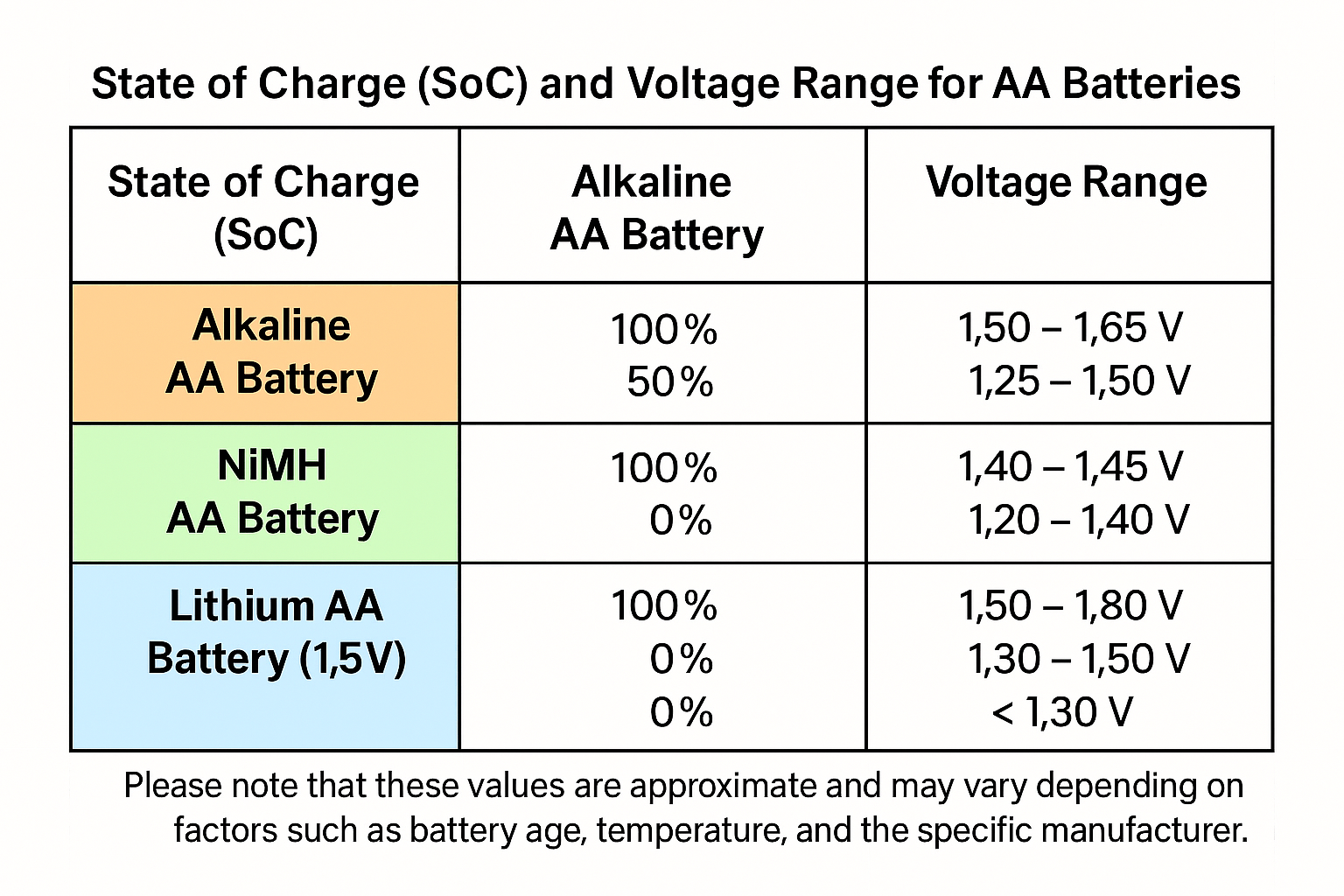
AA Battery Voltage Chart is your essential guide to understanding battery power. This chart reveals the exact voltage levels for different battery chemistries. It shows you their charge state from full to empty.
Knowing these voltage readings solves common power problems. You can accurately test batteries and avoid dead devices. It helps you maximize battery life and performance.
Best Battery Testers for Voltage Checking – Detailed Comparison
Klein Tools MM325 Multimeter – Best Overall Choice
The Klein Tools MM325 Digital Multimeter is our top recommendation for precise AA battery testing. It features auto-ranging capability and a clear digital display for accurate voltage readings down to 0.1V. This rugged tool is ideal for both home users and professionals who need reliable, repeatable measurements on all battery chemistries.
Energizer Battery Tester- Best Simple Option
For a quick, no-fuss check, the dedicated Energizer Battery Tester is perfect. It provides a simple color-coded LED system (green/yellow/red) to instantly show battery condition. This affordable, compact device is ideal for households and offices for rapidly sorting through a drawer of mixed batteries.
Fluke 107 AC/DC Current Handheld Digital Multimeter – Best Professional Pick
The Fluke 107 offers professional-grade accuracy for demanding applications. It provides true RMS readings and a high-resolution display for detecting subtle voltage drops. This model is the best option for technicians, engineers, and serious enthusiasts who require laboratory-level precision from a portable device.
AA Battery Voltage by Chemistry
AA battery voltage is not a single number. It varies significantly by the chemical composition inside the cell. Knowing these differences is crucial for proper use, testing, and disposal. This section breaks down the voltage profiles of the three main types.
Alkaline Battery Voltage Range
Standard Alkaline batteries are the most common disposable AA cells. Their voltage starts high but declines steadily with use. This predictable drop makes them easy to test with a basic voltage chart.
- Fresh/Full Charge: 1.50 to 1.65 volts.
- Good/Usable: 1.40 to 1.49 volts. Most devices operate well in this range.
- Weak/Replace Soon: 1.30 to 1.39 volts. Performance drops noticeably.
- Dead/Dispose: Below 1.30 volts. The battery is fully depleted.
NiMH Rechargeable Battery Voltage
Nickel-Metal Hydride (NiMH) rechargeables have a lower nominal voltage. They maintain a relatively flat voltage curve for most of their discharge cycle. This makes voltage a less precise indicator of remaining charge compared to Alkaline.
- Fully Charged: Approximately 1.40 to 1.45 volts off the charger.
- Nominal Voltage: 1.20 volts during most of the discharge.
- Fully Discharged: Around 1.00 to 1.10 volts. Time to recharge.
Pro Tip: A NiMH battery reading 1.20V might be half-full, while an Alkaline at 1.20V is dead.
Lithium AA Battery Voltage Profile
Lithium AA batteries (non-rechargeable) offer a very stable voltage. They provide almost their full power until nearly completely depleted. This makes them ideal for high-drain devices.
| State | Voltage Range | Characteristic |
|---|---|---|
| Fresh | 1.70 – 1.80V | Starts higher than Alkaline. |
| In Use | ~1.70 – 1.75V | Holds a remarkably steady voltage. |
| Depleted | < 1.40V | Sharp drop at the very end of life. |
Key Takeaway Summary:
- Alkaline: Starts at ~1.5V, declines steadily. Replace below 1.3V.
- NiMH: Nominal 1.2V. Flat curve, voltage is a poor charge indicator.
- Lithium: Starts ~1.8V, holds steady, then drops sharply.
How to Test AA Battery Voltage Accurately
Testing voltage is the definitive way to check a battery’s health. A simple multimeter gives you a precise numerical reading. Follow this guide for safe and accurate measurements every time.
Step-by-Step Guide to Using a Multimeter
Using a digital multimeter is straightforward. Always start with a fresh battery for testing your meter’s own power. Ensure your device is set up correctly to avoid false readings.
- Set Your Multimeter: Turn the dial to the DC Voltage (V–) setting. Choose the 2V or 20V range for AA batteries.
- Connect the Probes: Touch the red probe to the battery’s positive (+) terminal. Touch the black probe to the negative (–) terminal.
- Read the Display: Hold the probes steady. Record the stable voltage number displayed on the screen.
- Interpret the Result: Compare your reading to the standard AA battery voltage chart for that chemistry.
Interpreting Your Voltage Readings
The number on your meter tells a story. You must cross-reference it with the correct battery type. A “good” voltage for one chemistry may be “dead” for another.
For example, a reading of 1.3V has very different meanings. For an Alkaline battery, this indicates it is weak and should be replaced. For a NiMH rechargeable, this is a near-full charge and is perfectly normal.
Common Testing Mistakes to Avoid
Small errors can lead to incorrect conclusions. Avoid these common pitfalls to ensure your diagnosis is reliable.
- Testing Under Load: Measuring voltage while the battery is in a device gives a loaded voltage, which is lower. Always test batteries out of the circuit.
- Ignoring Chemistry: Applying Alkaline voltage standards to a NiMH battery will cause you to throw away perfectly good rechargeables.
- Dirty Contacts: Corrosion on battery terminals or multimeter probes can create resistance and a false low reading. Clean contacts with a pencil eraser.
Testing Quick Reference:
- Always: Test batteries separately, not in a device.
- Always: Know your battery’s chemistry (Alkaline, NiMH, Lithium).
- Never: Assume a “low” voltage means the battery is bad without checking the chart.
AA Battery Voltage Chart & Reference Table
A quick-reference chart is essential for practical battery testing. This section provides a clear, printable guide. Use this table to instantly diagnose any AA battery’s state of charge.
Complete AA Battery Voltage Reference Table
The table below consolidates voltage data for all major AA battery chemistries. It provides clear thresholds for action. Keep this chart near your battery drawer or toolbox for easy access.
| Battery Chemistry | Fresh/Full (V) | Good/Usable (V) | Weak/Replace (V) | Dead/Recharge (V) |
|---|---|---|---|---|
| Alkaline | 1.50 – 1.65 | 1.40 – 1.49 | 1.30 – 1.39 | < 1.30 |
| NiMH (Rechargeable) | ~1.45 | 1.20 – 1.40 | 1.10 – 1.19 | < 1.10 |
| Lithium (Primary) | 1.70 – 1.80 | 1.60 – 1.79 | 1.40 – 1.59 | < 1.40 |
How to Use the Voltage Chart Effectively
Simply matching a number is not enough. Effective use requires understanding context. Follow these steps for correct interpretation.
- Identify Chemistry: Check the battery label for “Alkaline,” “NiMH,” or “Lithium.”
- Take a Reading: Use your multimeter to get a stable voltage measurement.
- Find the Row: Locate your battery’s chemistry in the chart’s left column.
- Match the Range: Find which voltage column your reading falls into to determine its status.
Voltage vs. Capacity: What’s the Difference?
Voltage and capacity are related but distinct concepts. Understanding both is key to managing battery performance.
- Voltage (V): This is the electrical “pressure” or potential. It indicates the battery’s current state of charge and its ability to power a circuit right now.
- Capacity (mAh): This is the total electrical “energy” stored, measured in milliamp-hours. It defines how long the battery can last before needing replacement or recharge.
A battery can have a good voltage (1.5V) but low capacity if it’s old. This is why a “fresh” reading doesn’t always guarantee long runtime.
Chart Usage Tips:
- Print the table and laminate it for your workshop.
- Remember: NiMH voltages are lower than Alkaline when healthy.
- For rechargeables, voltage is a health check, not a precise fuel gauge.
Expert Tips for Maximizing AA Battery Life & Performance
Knowing voltage is the first step. Applying that knowledge extends battery life and improves device reliability. These expert strategies will help you get the most from every cell.
Optimal Storage Practices for Different Chemistries
How you store batteries significantly impacts their shelf life and performance. Each chemistry has unique requirements. Follow these guidelines to prevent premature discharge.
- Alkaline: Store in a cool, dry place at room temperature. Avoid heat sources. Remove batteries from devices not in use for long periods.
- NiMH Rechargeables: Store them partially charged (about 40-60%). Avoid storing them fully depleted or fully charged for months.
- Lithium: These have the longest shelf life. Storage conditions are less critical, but cool temperatures are still best.
Mixing Batteries: A Critical Safety Warning
Never mix batteries of different chemistries, ages, or charge levels in the same device. This is a fundamental rule for safety and performance.
Mismatched batteries cause uneven discharge. The weaker battery can be forced into reverse polarity, leading to leakage, overheating, or rupture. Always use a matched set from the same package and charge level.
When to Recharge vs. When to Dispose
Making the right call saves money and prevents damage. Use voltage as your primary guide, but consider other factors.
For rechargeable NiMH batteries, recharge when voltage drops below 1.1V per cell. For disposable Alkaline or Lithium batteries, dispose of them responsibly when they read below the “Dead” threshold on the chart. Never attempt to recharge a non-rechargeable battery.
| Battery Type | Action at Low Voltage | Key Consideration |
|---|---|---|
| NiMH | Recharge | Use a smart charger to prevent overcharging. |
| Alkaline | Dispose | Check for leakage before recycling. |
| Lithium | Dispose | Excellent shelf life; low self-discharge. |
Performance Pro Tips:
- For high-drain devices (digital cameras, flashlights), use Lithium or high-capacity NiMH cells.
- Clean battery contacts in devices with isopropyl alcohol to ensure optimal voltage delivery.
- Keep a log of purchase dates for rechargeables to track their lifespan.
Troubleshooting Common AA Battery Problems
Even with a voltage chart, some battery issues can be puzzling. This section diagnoses frequent problems and provides clear solutions. Learn to identify and fix issues beyond a simple low charge.
Diagnosing a Battery That Tests Good But Doesn’t Work
This frustrating scenario is common. The multimeter shows adequate voltage, but the device is dead. The issue is often high internal resistance or a lack of current under load.
- High Internal Resistance: Old or damaged batteries can show voltage but cannot deliver current. Test with a multimeter’s battery test function (if available) which applies a load.
- Device Contacts: Corroded or spring-loaded contacts in the device may not be making a proper connection. Clean them carefully.
- Instant Load Voltage Drop: The battery voltage may plummet the moment a load is applied, indicating it is truly dead despite the no-load reading.
Understanding and Preventing Battery Leakage
Battery leakage is corrosive and damages devices. It occurs when the internal chemistry breaks down, often due to age, heat, or deep discharge.
Alkaline batteries are most prone to leaking potassium hydroxide. To prevent it, never leave dead batteries in a device. Remove batteries from equipment stored for long periods. Store them in a cool, dry place.
Why Rechargeable Batteries Show Lower Voltage
Many users panic when their new NiMH batteries read only 1.2-1.3V. This is completely normal and not a sign of a defect.
NiMH and NiCd chemistries have a nominal voltage of 1.2V, unlike Alkaline’s 1.5V. Most modern devices are designed to operate efficiently within this lower range. Their performance comes from higher capacity and the ability to deliver strong current, not higher voltage.
| Symptom | Likely Cause | Quick Fix |
|---|---|---|
| Device dies quickly | High-drain device with weak Alkaline cells | Switch to Lithium or high-capacity NiMH. |
| Corrosion in battery compartment | Old, leaked Alkaline battery | Clean with vinegar and a cotton swab, then dry. |
| New rechargeables “not working” | Normal 1.2V voltage misunderstood | Use them; they are fine. Device must support 1.2V. |
Troubleshooting Checklist:
- Test voltage with a multimeter, not just a simple tester.
- Check for and clean any corrosion on contacts.
- Ensure you are using the correct battery chemistry for the device.
- Try a brand new, known-good battery to isolate the problem.
Advanced Applications: Voltage in Specialized Devices
Understanding voltage becomes critical in sensitive or high-performance electronics. Different devices have unique power requirements and tolerances. This knowledge ensures optimal function and prevents damage.
Using AA Batteries in Sensitive Electronics
Devices like digital calipers, medical equipment, and premium audio gear demand stable voltage. Voltage sag or noise can cause malfunctions or inaccurate readings.
For these applications, Lithium AA batteries are often the best choice. Their flat discharge curve provides consistent voltage. High-quality, low-self-discharge NiMH cells are also excellent for their steady 1.2V output.
Voltage Requirements for High-Drain Devices
High-drain devices pull current rapidly. Examples include digital cameras, powerful flashlights, and RC toys. They stress batteries, causing Alkaline cells to drop voltage quickly.
- Problem: Alkaline batteries struggle here. Their voltage plummets under high current, leading to short runtime and potential device shutdown.
- Solution: Use Lithium or high-amp NiMH batteries. They maintain voltage better under load, delivering full power and longer life.
Impact of Temperature on Battery Voltage
Temperature directly affects a battery’s chemical reactions and its measured voltage. Cold temperatures are a particular challenge for performance.
In cold environments, battery voltage drops temporarily. This can make a good battery appear dead. Lithium batteries perform best in extreme cold, making them ideal for outdoor winter equipment. Always allow batteries to warm to room temperature for an accurate voltage reading.
| Device Type | Recommended Chemistry | Key Voltage Consideration |
|---|---|---|
| Digital Camera / Flash | Lithium or High-Capacity NiMH | Must maintain voltage under very high burst current. |
| LED Flashlight | Lithium or NiMH | Stable voltage ensures consistent brightness. |
| Wall Clocks / Remote Controls | Alkaline or Standard NiMH | Low drain; steady, long-term voltage is key. |
| Outdoor Sensors | Lithium | Excellent performance in both high and low temperatures. |
Application Summary:
- High-Drain: Prioritize current delivery (Lithium/NiMH).
- Long-Term, Low-Drain: Prioritize capacity and shelf life (Lithium/Alkaline).
- Temperature Sensitive: Always choose Lithium for extremes.
Conclusion: Mastering Your AA Battery Voltage Chart
Understanding your AA battery voltage chart is a simple yet powerful skill. It transforms guesswork into precise diagnostics for all your devices. This knowledge saves money and prevents frustration.
The key takeaway is to always match your voltage reading to the correct battery chemistry. Use our printable reference table as your definitive guide. Invest in a basic multimeter for accurate testing.
Start applying these principles today. Test the batteries in your remote, flashlight, or camera. You will immediately identify weak cells and optimize performance.
With this guide, you are now equipped to manage battery power like a pro. Enjoy longer device life and reliable power everywhere.
Frequently Asked Questions about AA Battery Voltage
What is a healthy voltage for a AA battery?
A healthy voltage depends on the battery type. For Alkaline, 1.4V to 1.5V is excellent. For NiMH rechargeables, 1.2V to 1.3V is perfectly normal. Lithium AA batteries are healthy around 1.7V to 1.8V.
Always reference a voltage chart by chemistry. A “low” voltage for one type is often the standard operating voltage for another. Context is everything for an accurate assessment.
How to test a AA battery without a multimeter?
You can perform a simple drop test for Alkaline batteries. Hold the battery vertically 1-2 inches above a hard, flat surface and drop it. A good battery will land with a solid thud and not bounce.
A bouncing battery is likely depleted. This method is not precise and doesn’t work for rechargeables. For accurate results, a basic multimeter is a small, worthwhile investment.
What voltage should I recharge my NiMH batteries?
Recharge your NiMH batteries when their voltage drops to about 1.0 to 1.1 volts per cell. This indicates they are fully depleted and ready for a new cycle. Avoid recharging them when they are only partially used.
Using a smart charger is crucial. It automatically stops charging when full, preventing overcharging which damages cells and reduces their overall lifespan.
Why do my new batteries read 1.6V or higher?
A reading above 1.6V is normal for a fresh Alkaline or Lithium battery off the shelf. This is due to a slight surface charge from the manufacturing process. The voltage will settle to its nominal level after a brief period of use.
This higher initial reading confirms the battery is brand new and has not been used or stored for an excessively long time. It is not a cause for concern.
Can I mix old and new batteries in a device?
No, you should never mix old and new batteries. Mixing batteries with different charge levels causes the weaker cells to drain faster. The stronger new batteries can then force a reverse charge on the old ones.
This leads to potential leakage, overheating, and damage to your device. Always use a complete, matched set of batteries from the same package and charge state.
What is the best AA battery for high-drain devices?
Lithium AA batteries are the best for high-drain devices like digital cameras and powerful flashlights. They maintain a stable, high voltage under heavy load and perform well in temperature extremes.
High-capacity, low-self-discharge NiMH batteries (like Eneloop) are an excellent rechargeable alternative. They offer strong current delivery and can be recharged hundreds of times, making them cost-effective for frequent use.
How does cold weather affect battery voltage?
Cold temperatures slow down the chemical reactions inside a battery. This causes a temporary drop in its measurable voltage and available current, making it seem weak or dead. Performance will often return when the battery warms up.
Lithium batteries are the most resilient in cold weather. For critical outdoor winter gear, they are the recommended choice over Alkaline or standard NiMH cells.
Is 1.2 volts good for a AA battery?
Yes, 1.2 volts is perfectly good for a NiMH rechargeable AA battery—it’s their standard operating voltage. However, 1.2 volts is very low for an Alkaline AA and indicates it is nearly dead and should be replaced.
This is the most common point of confusion. You must know your battery’s chemistry to correctly interpret a 1.2V reading using the appropriate voltage chart.
What is the normal voltage for a new AA battery?
The “normal” voltage depends entirely on the battery’s chemistry. A fresh battery will measure at the high end of its specific range.
- New Alkaline AA: Typically reads between 1.50 and 1.65 volts.
- New NiMH AA (fresh off charger): Around 1.40 to 1.45 volts, settling to ~1.2V.
- New Lithium AA: Usually between 1.70 and 1.80 volts.
Always check the label to confirm the chemistry before judging the voltage.
At what voltage is a 1.5V AA battery dead?
For a standard 1.5V Alkaline AA battery</strong, it is considered dead and should be replaced when its open-circuit voltage drops below 1.30 volts. At this level, it can no longer provide useful power to most devices.
Important: A “1.5V” NiMH rechargeable is normal at 1.2V. Do not dispose of it based on the Alkaline standard.
Can I use a battery that reads 1.3V?
It depends on the battery type and the device. For an Alkaline battery, 1.3V is in the “weak” range. It may work in a very low-drain device like a wall clock for a short time.
For a NiMH rechargeable, 1.3V indicates a fairly full charge. It is perfectly usable and will provide good performance. Always reference the correct voltage chart.
Why do my rechargeable AAs only show 1.2V?
This is completely normal and indicates they are functioning correctly. Nickel-Metal Hydride (NiMH) chemistry has a nominal voltage of 1.2 volts per cell. This is a fundamental characteristic, not a sign of being weak or half-charged.
Modern electronics are designed to operate efficiently at this voltage. Their advantage lies in high capacity and rechargeability, not higher voltage.
FAQ Quick Reference:
- Normal Voltage: Alkaline ~1.5V, NiMH ~1.2V, Lithium ~1.8V.
- Dead Alkaline: Below 1.30V.
- 1.2V Rechargeables: This is normal, not low.
- Always: Identify chemistry before judging voltage.