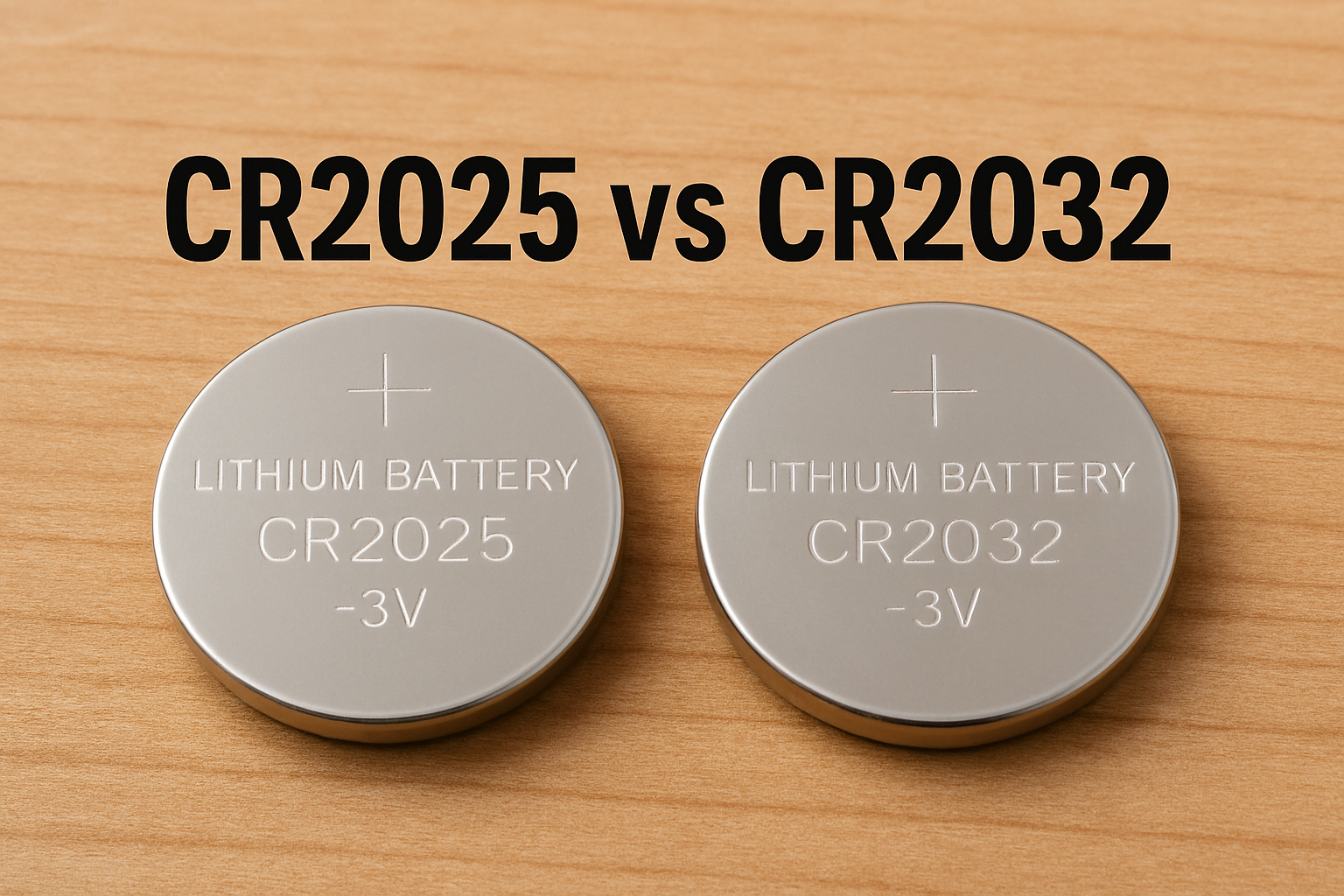
CR2025 and CR2032 batteries are both common 3V coin cells, but they are not interchangeable. The key difference is their thickness, which affects capacity and device compatibility. Choosing the wrong one can lead to poor performance or a device that won’t close.
This confusion can cause frustration and device failure. Our complete guide provides clear, expert-backed comparisons to solve this common problem. You’ll learn to select the perfect battery every time.
Best Batteries for Your Devices – Detailed Comparison
Duracell CR2032 – Best Overall Choice
The Duracell CR2032 is the gold standard for reliability and longevity. With its high 240mAh capacity, it provides consistent power for demanding devices like key fobs and computer motherboards. Its trusted brand ensures a long shelf life and dependable performance in critical applications.
Energizer CR2025 – Best for Slim Devices
Choose the Energizer CR2025 for ultra-thin electronics where space is constrained. Its 163mAh capacity is perfectly suited for slim calculators, some car remote heads, and hearing aids. This battery delivers reliable power while maintaining the sleek design profile of your compact gadgets.
Panasonic CR2032 – Best Value Pack
The Panasonic CR2032 offers exceptional value in multi-packs without sacrificing quality. Ideal for households with multiple battery-powered devices like scales, toys, and thermometers. You get reliable Japanese engineering at a cost-effective price point, making it the smart choice for bulk needs.
Key Differences Between CR2025 and CR2032 Batteries
Understanding the core distinctions between these batteries is crucial. The main differences are physical size, capacity, and device compatibility. Choosing incorrectly can lead to device damage or poor performance.
Physical Dimensions and Thickness
The most critical difference is their thickness. Both share a 20mm diameter, but their height varies significantly. This small measurement has a major impact on where each battery can be used.
- CR2025: Measures 20mm x 2.5mm. The “25” denotes a 2.5mm thickness.
- CR2032: Measures 20mm x 3.2mm. The “32” denotes a 3.2mm thickness.
The CR2032 is 0.7mm thicker. This extra space allows for a larger internal cell and more capacity.
Battery Capacity and Lifespan
Capacity, measured in milliamp-hours (mAh), dictates how long a battery lasts. Thicker batteries typically have higher capacity. This is the key factor for longevity.
| Battery Model | Typical Capacity | Relative Lifespan |
|---|---|---|
| CR2025 | ~160-165 mAh | Shorter |
| CR2032 | ~220-240 mAh | 30-50% Longer |
The CR2032’s higher mAh rating means it will power a device for a longer period before needing replacement.
Device Compatibility and Interchangeability
Can you use them interchangeably? The answer is: it depends entirely on the device’s battery compartment. Forcing a thicker battery can damage the device.
- Use a CR2032 in a CR2025 slot: Risk of not fitting or damaging contacts.
- Use a CR2025 in a CR2032 slot: May lose contact; will deplete faster.
Always check your device manual. The compartment is often designed for an exact battery height.
Key Takeaway: The CR2032 has more capacity and lasts longer, but the CR2025 is essential for slim devices. Never force a fit.
How to Choose the Right Battery: CR2025 or CR2032?
Selecting the correct coin cell prevents device issues and optimizes performance. Follow this practical guide to make the right choice every time. We cover the three most reliable methods for identification.
Check Your Device’s Manual or Battery Compartment
The manufacturer’s information is the most accurate source. Always look here first for a definitive answer. This removes all guesswork from the process.
- Consult the user manual: The specifications page will list the required battery model.
- Examine the old battery: The model number is printed clearly on the top metal surface.
- Look inside the compartment: Some devices have the model stamped or printed next to the battery holder.
Common Applications for Each Type
Certain devices typically use one battery over the other. Knowing common uses provides a strong clue if other methods fail.
- Common CR2032 Uses: Computer motherboards (CMOS), key fobs, digital thermometers, fitness trackers, and car tire pressure sensors.
- Common CR2025 Uses: Slim calculators, some hearing aids, older car remotes, and very thin electronic organizers.
The trend is clear: thicker, higher-drain devices use CR2032; space-constrained devices use CR2025.
What to Do If You’re Unsure
If you cannot identify the required battery, follow this safe decision tree. Never force a battery that doesn’t fit snugly.
- Measure the empty compartment’s depth with a ruler or caliper.
- If the compartment is very shallow (<2.8mm), a CR2025 is likely required.
- If in doubt, purchase both. Test the thinner CR2025 first to avoid damage.
Pro Tip: When replacing, take the old battery to the store for a perfect match. A visual comparison is foolproof.
Performance, Lifespan, and Safety Considerations
Beyond physical size, performance and safety are critical factors. This section covers what to expect from each battery in real-world use. Proper handling ensures both device safety and optimal battery life.
Expected Lifespan in Common Devices
Battery life varies dramatically based on the device’s power draw. A high-drain device will deplete a battery much faster than a low-drain one. Here are typical lifespans.
- CR2032 in a Key Fob: 3-5 years with normal use due to intermittent, low power draw.
- CR2032 in a Motherboard (CMOS): 5-10 years, as it only maintains BIOS settings when the computer is off.
- CR2025 in a Calculator: 2-4 years, depending on usage frequency and display type.
Remember, the CR2032’s higher capacity gives it a longer lifespan in the same device.
Voltage and Performance Characteristics
Both batteries are nominal 3-volt cells, but their performance curves differ. Understanding this prevents misdiagnosing device problems.
| Characteristic | CR2025 | CR2032 |
|---|---|---|
| Nominal Voltage | 3V | 3V |
| Voltage Curve | Declines slightly faster under high load | Maintains stable voltage longer |
| Best For | Low to moderate, consistent power draw | Devices with occasional high pulse demands |
For devices like tire pressure sensors that send periodic strong signals, the CR2032 is more robust.
Essential Safety and Handling Tips
Proper handling protects you and your devices. Lithium coin cells are safe when used correctly but require caution.
- Keep them away from children: If swallowed, they can cause severe internal burns.
- Do not recharge or heat: These are primary (non-rechargeable) batteries. Attempting to charge them can cause leakage or rupture.
- Insert correctly: Match the (+) and (-) symbols in the compartment. Incorrect installation can damage the device.
- Store properly: Keep in original packaging in a cool, dry place to maximize shelf life.
Safety Summary: Both batteries deliver safe, reliable power when matched to the correct device and handled with basic precautions. Never force, recharge, or mishandle them.
Troubleshooting Common CR2025 and CR2032 Issues
Even with the right battery, problems can occur. This troubleshooting guide solves the most frequent issues users face. Quick diagnosis can save you time and money on unnecessary replacements.
Battery Doesn’t Fit or Device Won’t Close
This is a clear sign of using the wrong battery thickness. Forcing it can permanently damage the battery compartment or device casing. Follow these steps.
- Stop immediately: Do not apply pressure to close the device.
- Remove and verify: Check the model number on the battery you tried to install.
- Measure the compartment: Use a ruler to check the depth. A compartment under 3mm likely needs a CR2025.
- Solution: Purchase the correct, thinner CR2025 battery.
New Battery Doesn’t Work or Dies Quickly
A fresh battery that fails indicates other potential problems. Don’t assume you bought a dud. Systematically check these points.
- Check polarity: You may have inserted the battery upside down. The (+) side should face up, unless the manual states otherwise.
- Clean the contacts: Use a cotton swab and isopropyl alcohol to clean metal contacts in the device. Corrosion can block power.
- Device short circuit: The device itself may have an internal fault draining power. Test the new battery in a different, working device.
- Old stock: Batteries on a store shelf for years lose charge. Check the packaging for a manufacture date.
Identifying and Handling a Leaking Battery
Lithium coin cells rarely leak, but it can happen if damaged or expired. A leaking battery is a serious hazard. Handle it with extreme care.
- Do not touch the leakage: The chemical substance can be corrosive and harmful to skin.
- Wear gloves: Use disposable gloves to remove the battery from the device.
- Dispose of properly: Place the leaking battery in a sealed plastic bag. Take it to a designated battery recycling center.
- Clean the device: After removal, carefully clean the compartment with a cotton swab dipped in vinegar or lemon juice to neutralize residue, then dry thoroughly.
Troubleshooting Tip: When in doubt, the simplest solution is often correct. Double-check the battery model and installation orientation before investigating complex faults.
Purchasing Guide and Cost Comparison
Smart shopping ensures you get quality batteries at a fair price. Prices vary by brand, quantity, and retailer. Understanding value helps you avoid overpaying for your specific needs.
Where to Buy CR2025 and CR2032 Batteries
These batteries are widely available through multiple channels. Each option has distinct advantages for convenience, price, and selection.
- Electronics Stores (Best Buy, Micro Center): Ideal for immediate need and brand selection. Staff can often help with identification.
- Big-Box Retailers (Walmart, Target): Offer competitive prices on multi-packs of major brands like Duracell and Energizer.
- Online Marketplaces (Amazon, eBay): Provide the best prices for bulk purchases and access to value brands like Panasonic and Sony.
- Automotive Stores: A reliable source, especially for CR2032 batteries commonly used in key fobs.
Price Analysis: Single vs. Multi-Pack Value
Buying in bulk almost always reduces the cost per battery. Assess your usage to determine the most economical pack size.
| Pack Size | Average Price Range | Best For | Cost Per Battery |
|---|---|---|---|
| Single Battery | $3 – $6 | One-time emergency replacement | High ($3-$6) |
| 2-4 Pack | $5 – $10 | Households with a few devices | Medium ($2-$3) |
| 6-10 Pack | $8 – $15 | Savvy users or multiple devices | Low ($1-$1.50) |
| Bulk (20+) | $15 – $30 | Businesses or extensive personal use | Lowest (<$1) |
Brand Recommendations and What to Avoid
Not all batteries are created equal. Stick with reputable brands for consistent performance and safety.
- Trusted Brands: Duracell, Energizer, Panasonic, Sony, and Maxell. These offer reliable quality, stated capacity, and long shelf life.
- Value Brands: AmazonBasics, VARTA. Often good performance for a lower price, especially in multi-packs.
- What to Avoid: Extremely cheap, no-name brands sold in blister packs without clear labeling. They may have inconsistent capacity, shorter life, or higher failure rates.
Shopping Tip: For standard home use, a 4-pack of a major brand offers the best balance of cost and freshness. Avoid buying more than you can use in 2-3 years.
Environmental Impact and Proper Disposal
Lithium coin cells contain materials that require responsible end-of-life handling. Proper disposal protects the environment and complies with local regulations. It’s a simple but crucial step for eco-conscious consumers.
Why You Should Never Throw Them in the Trash
Discarding these batteries in household waste poses significant environmental and safety risks. Landfills are not equipped to handle their specific chemistry.
- Soil and Water Contamination: Metals and electrolytes can leach into groundwater as the casing corrodes.
- Fire Hazard: In waste facilities, batteries can be crushed or compacted, potentially causing short circuits and fires.
- Waste of Resources: Valuable materials like lithium, manganese dioxide, and steel are not recovered for recycling.
Throwing them away is illegal in many regions due to these hazards.
How to Recycle CR2025 and CR2032 Batteries
Recycling is easier than most people think. Multiple convenient options exist for turning in your used batteries.
- Store Drop-Off: Many retailers (Best Buy, Home Depot, Lowe’s, Target) have free battery recycling bins near the entrance.
- Local Hazardous Waste Facility: Your city or county likely operates a collection site for household hazardous waste, including batteries.
- Mail-Back Programs: Organizations like Call2Recycle offer pre-paid mailer kits for a small fee, ideal for rural areas.
Pro Tip: Tape the terminals of used batteries with clear tape before storing or recycling. This prevents accidental short-circuiting.
Eco-Friendly Alternatives and Future Trends
While single-use lithium cells dominate now, the landscape is evolving. Awareness of sustainable options is growing.
- Rechargeable Alternatives (ML Series): Batteries like the ML2032 exist but are less common. They require a special charger and have a lower voltage (3.0V vs. 3.2V nominal), which may not be compatible with all devices.
- Manufacturer Take-Back: Some electronics manufacturers include prepaid return labels for device batteries.
- Future Outlook: Research continues into more sustainable battery chemistries and improved recycling rates to create a circular economy for these critical components.
Environmental Summary: Always recycle your used coin cells. It’s a small action with a collective major impact on reducing pollution and conserving resources.
Expert Tips for Storage and Maximizing Battery Life
Proper storage extends the shelf life of unused batteries and ensures peak performance. These expert practices prevent premature discharge and damage. Implementing them saves money and guarantees reliability when you need power.
Optimal Conditions for Long-Term Storage
Environmental factors significantly impact a battery’s shelf life. Ideal storage slows the internal chemical reactions that cause self-discharge.
- Temperature: Store in a cool, dry place at room temperature (approx. 20°C/68°F). Avoid extreme heat (like a car glovebox) or freezing cold.
- Humidity: Keep batteries away from moisture to prevent corrosion on the metal casing and terminals.
- Original Packaging: Leave new batteries in their sealed blister pack until needed. This protects terminals from short-circuiting.
- Organization: Label packs with the purchase date to use the oldest stock first (FIFO – First In, First Out).
How to Test a Coin Cell Battery’s Charge
You can easily check if a battery is dead or still has life. A simple multimeter provides the most accurate diagnosis.
- Set a digital multimeter to the DC voltage setting, specifically the 20V or 10V range.
- Touch the red (positive) probe to the battery’s top (+) side and the black (negative) probe to the bottom (-) side.
- Read the voltage. A fresh battery shows ~3.3V. Anything below 2.5V is considered depleted for most device applications.
For a quick, less accurate test, some users drop the battery on a table from a low height. A “dead” battery may bounce slightly higher, but the multimeter method is definitive.
Preventing Common Battery Drain Issues
Maximize the operational life of a battery inside your device. Certain habits and checks can prevent unnecessary power loss.
- Avoid Heat Exposure: Don’t leave devices (like key fobs) in direct sunlight or on hot surfaces.
- Clean Device Contacts: As mentioned in troubleshooting, dirty contacts increase resistance and drain power.
- Store Devices Properly: If storing a device long-term, remove the battery to prevent potential slow leakage or drain.
- Check for Parasitic Drain: If a device drains batteries abnormally fast, it may have an internal electrical fault.
Storage Summary: Cool, dry, and in original packaging is the golden rule. Test voltage with a multimeter for certainty, and remove batteries from unused devices.
Conclusion: Making the Right CR2025 vs CR2032 Choice
Choosing between a CR2025 and CR2032 battery is simple once you know the key differences. The thickness and capacity are the deciding factors for device compatibility and lifespan. Always match the battery to your device’s specifications.
Use our identification guide to avoid fitting issues and poor performance. Remember to purchase from reputable brands and recycle used batteries responsibly. This ensures both device reliability and environmental care.
Bookmark this guide for your next battery replacement. Share it with friends or family who might find it helpful. Being informed saves time, money, and frustration.
You are now equipped to confidently power your devices. Make the smart choice every time.
Frequently Asked Questions about CR2025 and CR2032 Batteries
What is the main difference between CR2025 and CR2032?
The primary difference is thickness and capacity. A CR2025 is 2.5mm thick, while a CR2032 is 3.2mm thick. This 0.7mm difference allows the CR2032 to hold more chemical material.
Consequently, the CR2032 has a higher capacity (typically 220-240mAh vs. 160-165mAh). This gives it a longer lifespan in compatible devices.
Can I use a CR2032 instead of a CR2025?
Only if the device’s battery compartment has extra depth. The CR2032 is 0.7mm thicker, which may prevent the device from closing or damage the contacts. Forcing it is not recommended.
If the compartment is deep enough, it will work and last longer. However, always check your device manual first to ensure compatibility and avoid potential damage.
How can I tell which battery my device needs?
First, check the old battery for its printed model number. Second, consult the device’s user manual or look for markings inside the battery compartment. These are the most reliable methods.
If those aren’t options, measure the compartment depth. A very shallow compartment (under 3mm) likely requires the thinner CR2025 battery for a proper fit.
Which battery lasts longer, CR2025 or CR2032?
The CR2032 battery lasts significantly longer due to its higher capacity. It typically has 30-50% more milliamp-hours (mAh) than the CR2025. This translates to more operational time in the same device.
However, you can only benefit from this longer life if your device is designed to fit the thicker CR2032. Using a CR2025 in a CR2032 slot will result in shorter life.
What are the most common uses for each battery type?
CR2032 batteries are standard for computer motherboards (CMOS), key fobs, digital thermometers, and fitness trackers. Their higher capacity suits devices with higher energy demands.
CR2025 batteries are often found in ultra-slim devices like certain calculators, hearing aids, and older remote controls where the thinner profile is a strict design requirement.
Why does my new battery die so quickly?
A quickly dying new battery can have several causes. First, ensure it’s installed with the correct polarity (+/-). Second, the device contacts may be dirty, causing a poor connection and power drain.
It could also be an old stock battery that has lost charge on the shelf, or the device itself may have an internal electrical fault drawing excessive power.
What is the best way to store spare batteries?
Store spare batteries in their original packaging in a cool, dry place at room temperature. This slows the self-discharge rate. Avoid locations with high humidity or temperature extremes, like a car glovebox.
Keep the terminals protected from contact with other metal objects to prevent short-circuiting. Using a labeled container helps you use the oldest batteries first.
Are CR2025 and CR2032 batteries recyclable?
Yes, both battery types are recyclable and should never be thrown in regular trash. They contain materials that can be recovered and are considered household hazardous waste in many areas.
Take them to a dedicated battery recycling drop-off point at many retailers (Best Buy, Home Depot) or your local hazardous waste facility. Tape the terminals before storing for recycling.